


Key Takeaways
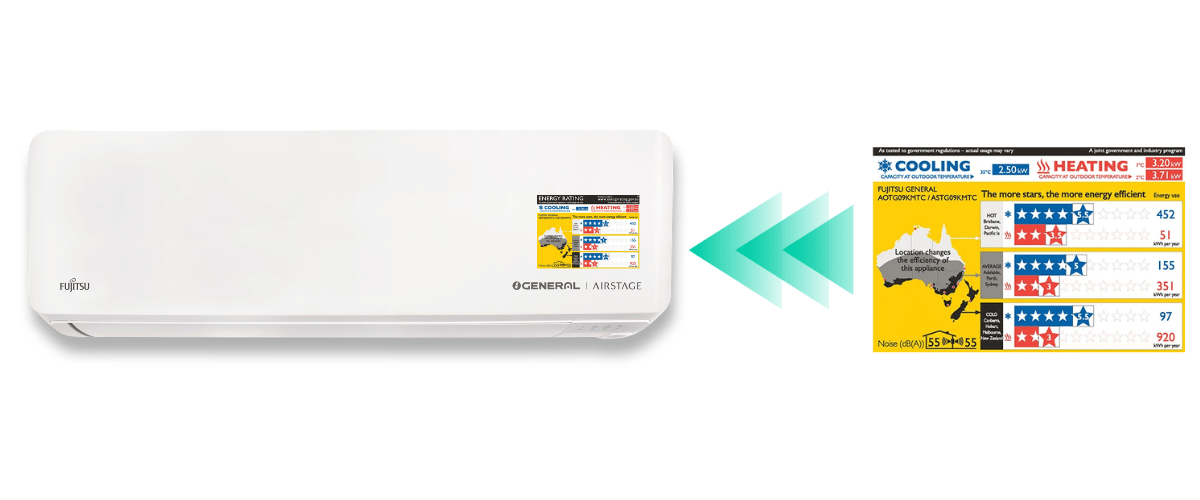
The Zoned Energy Rating Label (ZERL) helps you compare the seasonal energy efficiency of heat pump and air conditioners under standardised climate-zone conditions.
New Zealand is classified as a COLD climate zone, so always focus on these ratings when comparing systems.
Choosing the correct system size and type is key to performance and energy efficiency.
Higher star ratings mean better energy efficiency and lower long-term running costs, even if upfront costs are higher. A less expensive system with a lower 2 star energy rating may result in higher ongoing energy use.
Always check both heating and cooling star ratings, especially in NZ, where heating performance is often more important.
ZERL also provides estimated annual energy consumption in kilowatt hours (kWh), which can be used with your electricity tariff to estimate running costs.
Zoned Energy Rating Label for GENERAL Airstage Heat Pumps / Air Conditioner
GENERAL New Zealand (formerly Fujitsu New Zealand) heat pumps / air conditioners that are supplied with a Zoned Energy Rating Label (ZERL), provide energy-efficiency information to help you compare different models..
The ZERL provides a seasonal efficiency rating based on climate conditions. Because New Zealand is classified as a COLD zone, you should focus on this section of the label when comparing systems..
The label provides separate information for heating and cooling, including star ratings and estimated annual energy consumption in kWh.
OLD vs NEW Zoned Energy Rating Label for General Airstage Heat Pumps / Air Conditioners
Understanding the difference between the old Energy Rating Label (ERL) and the NEW Zoned Energy Rating Label (ZERL).

OLD Energy Rating Label (ERL)
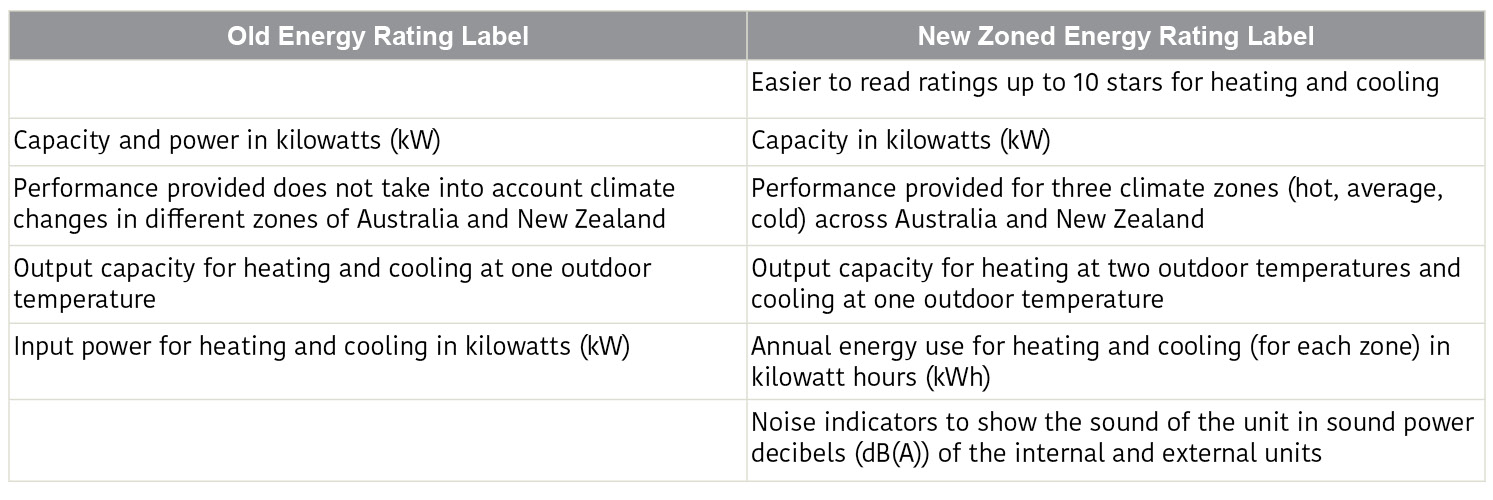
The star rating on the old label measured how much cooling or heating output was achieved per unit of power. It related to the efficiency of the heat pump / air conditioner at a particular temperature but did not take into account consumer usage patterns in different locations of Australia and New Zealand to determine typical electricity use.

NEW Zoned Energy Rating Label (ZERL)
The star ratings on the new label reflect how the heat pump / air conditioner will perform over a range of temperatures and allows an annual electricity figure to be calculated (these are the blue and red ‘kWh per year’ figures on the ZERL).
Key Features
Performance Calculations
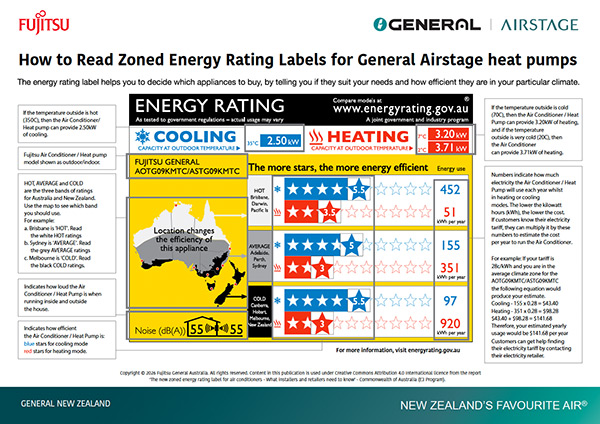
How to read the NEW Zoned Energy Rating Label for General Airstage Heat Pumps / Air Conditioners
For an easy reference guide, click the image below.
How to use the Zoned Energy Rating Label for General Airstage Heat Pumps / Air Conditioners
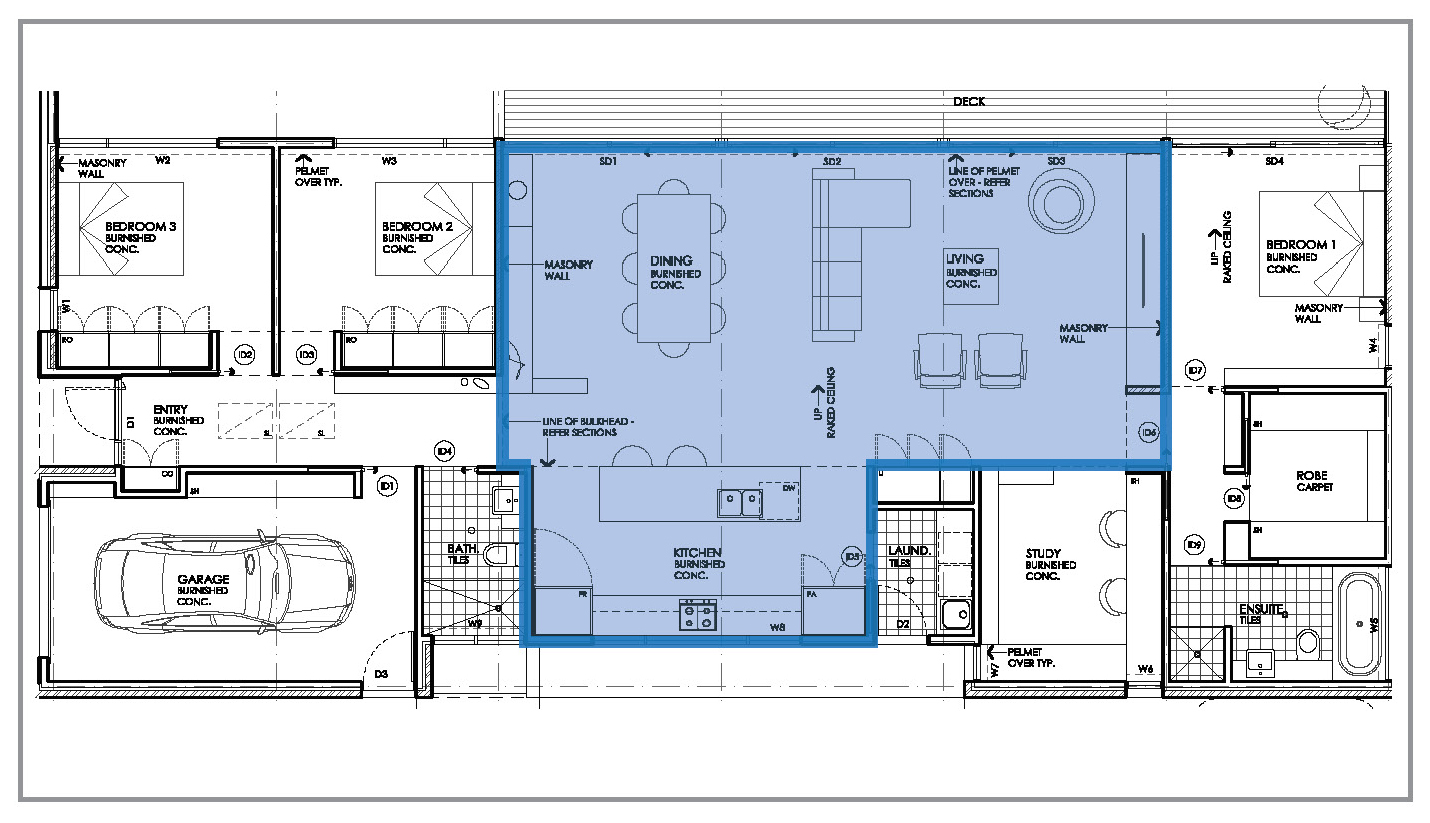
Step 1: Find out what size heat pump / air conditioner you need
Start by determining the right system size for your space. For example, a family with a three-bedroom home looking to heat and cool an open-plan living area may be advised by their installer to choose a 7 kW unit based on room size and layout. For smaller spaces or individual rooms, you may find that single room solutions, such as a wall mounted heat pump / air conditioner, is a more suitable and energy-efficient option.
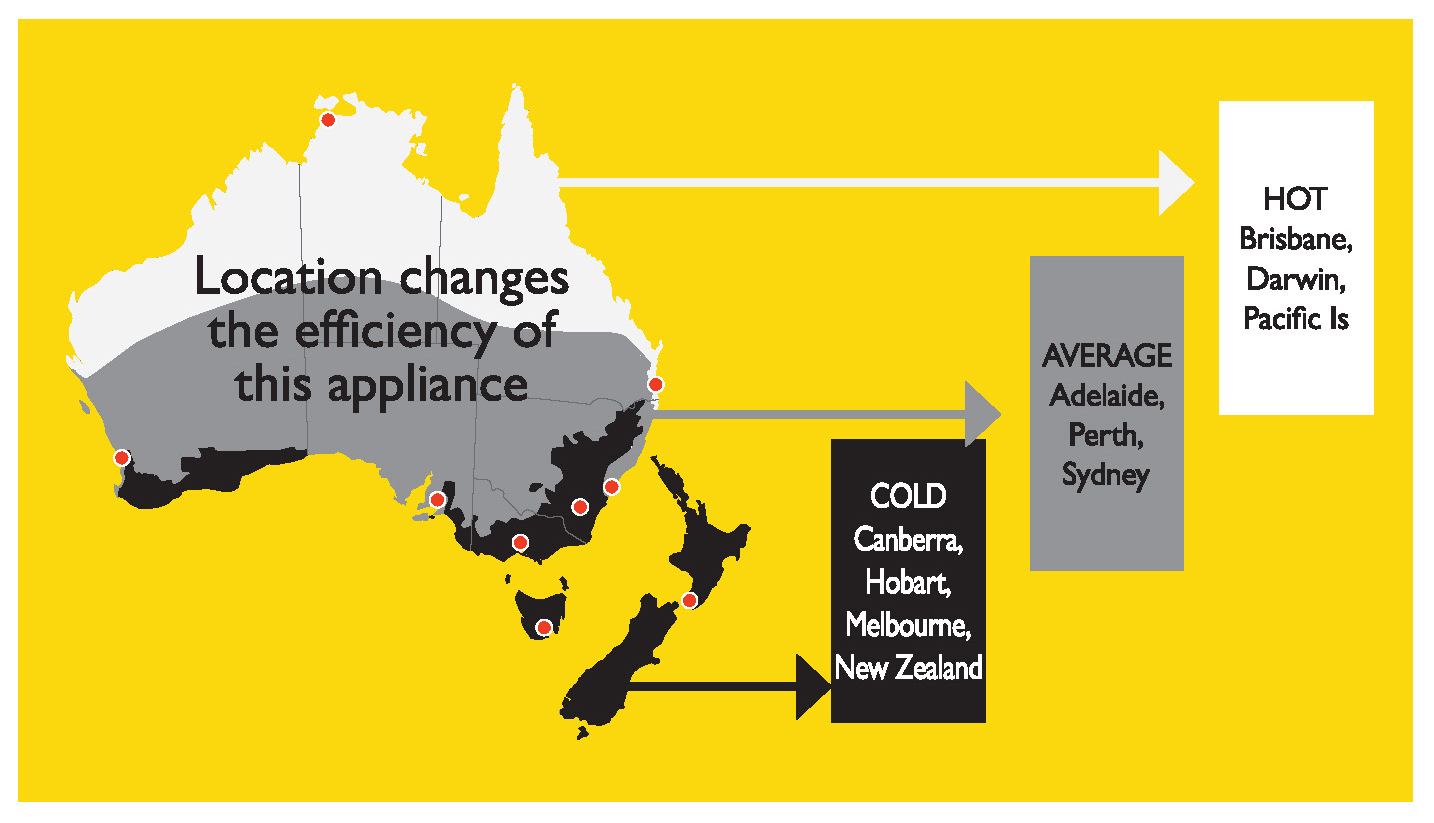
Step 2: Understand your climate zone
In New Zealand, the entire country falls within the COLD climate zone under the ZERL. This is important, as heat pump / air conditioner performance can vary depending on climate conditions.
When comparing systems, always focus on the COLD zone ratings, as these provide the most accurate indication of how the unit will perform in New Zealand homes.
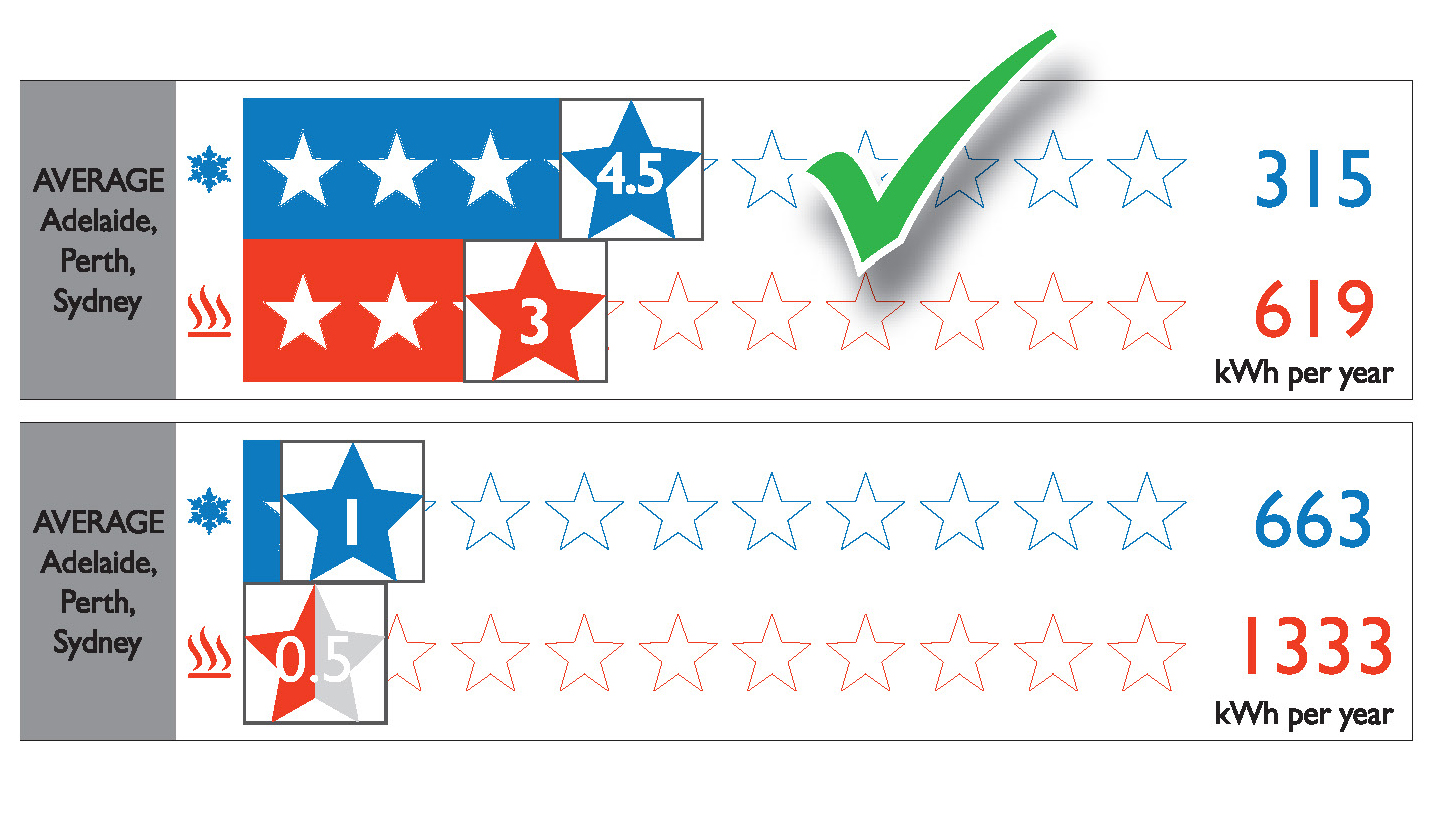
Step 3: Compare star ratings in the COLD zone
Next, compare heat pump / air conditioner options based on their energy star ratings and annual energy consumption in the COLD zone.
A higher star rating indicates better efficiency, meaning the system uses less electricity to deliver the same level of heating or cooling. For instance, a unit with a 2 star energy rating will generally cost more to run than a higher-rated model of the same capacity.
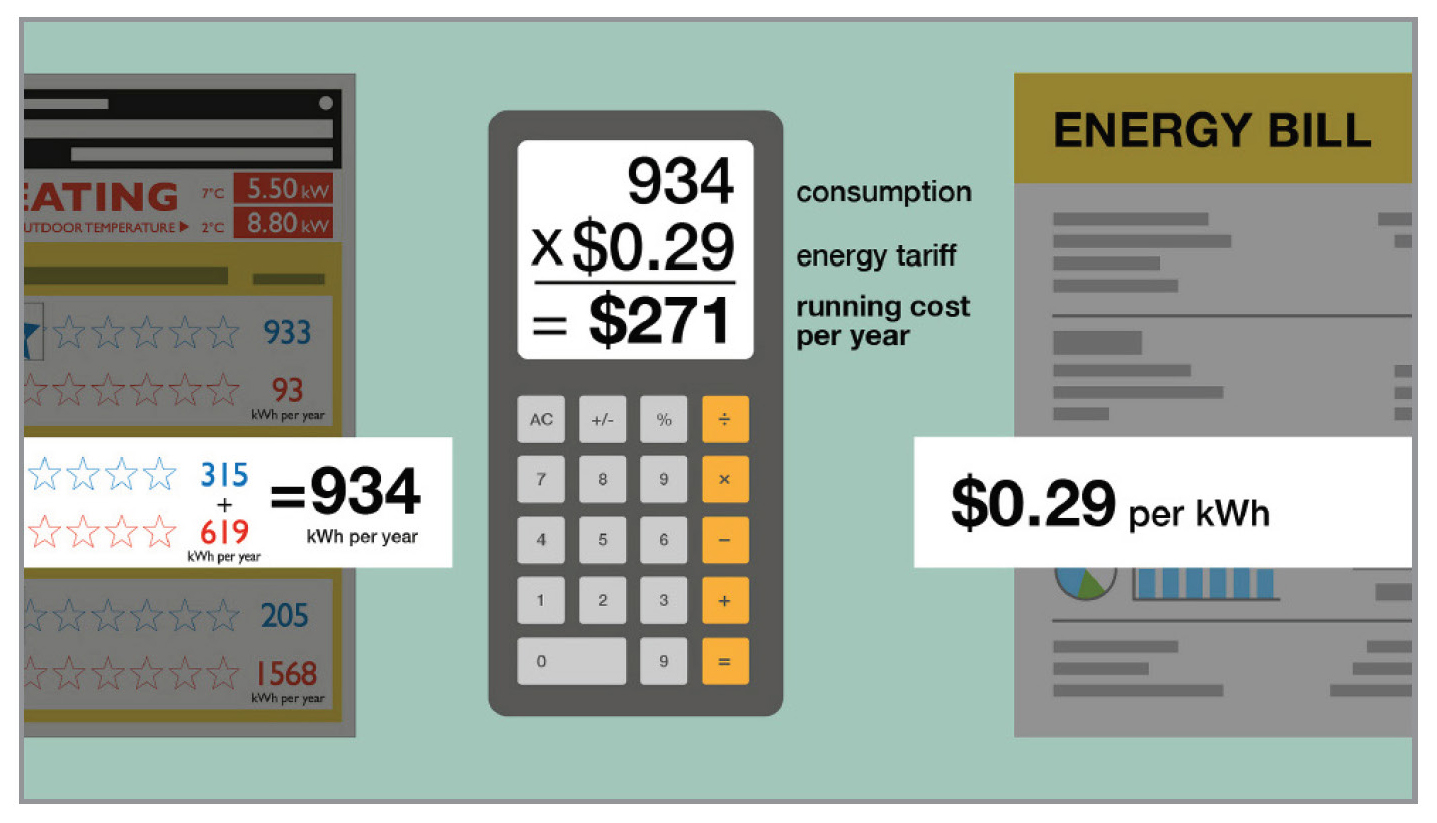
Step 4: Estimate annual running costs
The annual energy consumption figures on the ZERL can help you estimate potential running costs.
To calculate an indicative annual cost:
Annual energy use (kWh) × your electricity tariff ($/kWh) = estimated annual running cost
For example, if a system's relevant annual energy consumption is 1,500 kWh and your electricity tariff is $0.30 per kWh:
1,500 kWh × $0.30 = $450 per year
This is an example only. The ZERL figures are based on standardised testing and usage assumptions, so your actual electricity consumption and running costs may be higher or lower depending on how and where you use your heat pump or air conditioner.
For the latest information on New Zealand electricity prices, refer to current information from the Ministry of Business, Innovation and Employment (MBIE) and your electricity retailer.
Understanding Energy Star Ratings for Heat Pumps / Air Conditioners
Energy star ratings are one of the most useful tools for comparing the efficiency and running costs of different heat pumps / air conditioners. Understanding how they work can help you choose a system that delivers better performance while using less energy.
What Do the Stars Mean?
The star rating system is designed to show how energy efficient a unit is:
Ratings typically run from 1 to 10 stars
The more stars, the more energy-efficient the unit
A 2 star energy rating indicates a unit is below average in efficiency, meaning it will generally cost more to run each year compared to higher-rated models of the same capacity
Most modern heat pumps / air conditioners available in New Zealand will display between 2 and 6 stars, depending on the operating mode and climate zone.
While lower-rated units may have a lower upfront cost, higher star ratings can lead to lower long-term running costs, making them a worthwhile consideration.
Can I Compare Stars Between Old and New Labels?
No, and this is an important distinction.
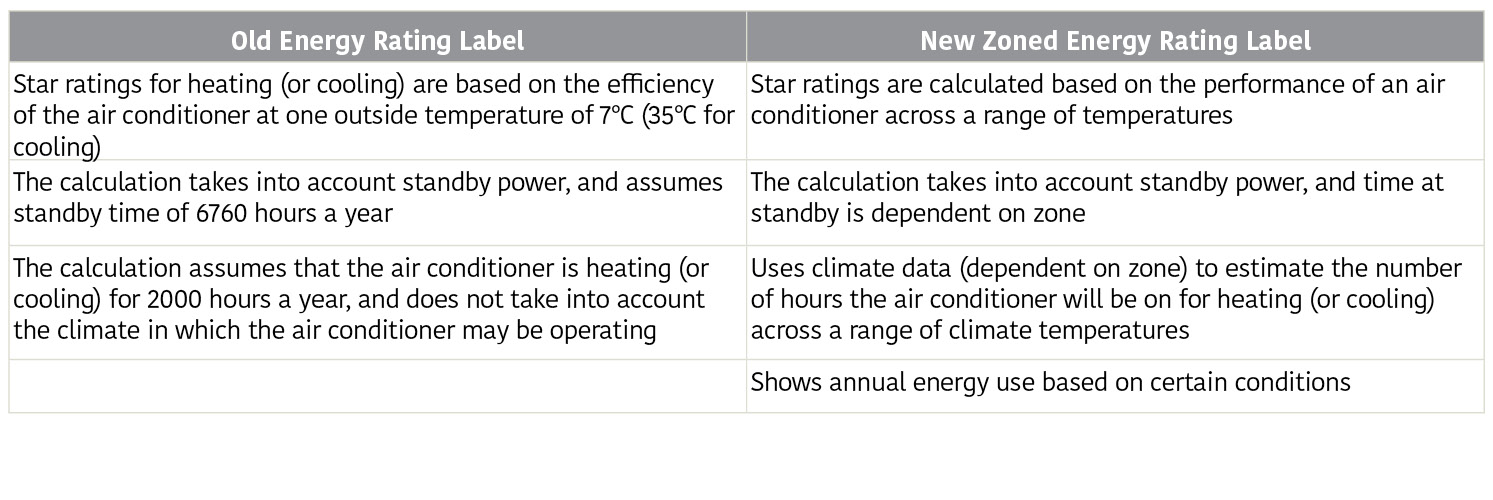
Older energy labels measured efficiency at a single fixed temperature, which didn’t reflect how a system performs in real-world conditions. The ZERL, on the other hand, measures seasonal performance across a full year based on your climate zone.
This means a 5 star rating on an older label is not directly comparable to a 5 star rating on the ZERL. When comparing systems, always ensure you are looking at the same type of label.
Heating Star Ratings vs Cooling Star Ratings
The ZERL displays separate star ratings for heating and cooling, which is especially important in New Zealand.
In the COLD zone, heating performance is often the most relevant for overall energy use
A heat pump / air conditioner may have different star ratings for heating and cooling, so it’s important to check both
If you primarily use your system for heating during winter, prioritise the heating star rating when comparing models
Each rating is also supported by an annual energy consumption figure (kWh), allowing you to estimate running costs and compare systems more accurately.
By understanding both heating and cooling performance, you can select a system that delivers the best balance of comfort and efficiency for your home.
Common Questions
Why the change?
The Zoned Energy Rating Label (ZERL) was introduced to provide consumers with more accurate and useful information about the expected energy use of GENERAL Airstage heat pumps / air conditioners under different climate conditions..
Unlike older labels, the ZERL reflects how a system performs over a full year of typical use. This helps you better evaluate and compare the energy efficiency of different heat pump / air conditioning products, making it easier to choose a system that can reduce your energy bills over time.
It’s important to note that ZERL labelling does not cover ducted systems, so ducted heat pumps and air conditioners are not required to display a ZERL.
Are the stars the same?
No, they are not the same.
You should not directly compare the star rating on an older label with a star rating on the ZERL. This is because the two systems use different methods to calculate efficiency.
Older labels measured performance at a single fixed temperature. In contrast, the ZERL measures seasonal performance across an entire year, providing a more realistic indication of how a heat pump / air conditioner will perform in your home.
How loud is that noise level on the label?
The ZERL also includes a noise rating, measured in decibels (dBA), to help you understand how loud a unit may be at full capacity.
For context:
30 dBA: Similar to a whisper
40 dBA: Similar to running water
50 dBA: Similar to moderate rainfall
60 dBA: Similar to a normal conversation
70 dBA: Similar to an operating vacuum cleaner
These noise levels are measured with the heat pump / air conditioner running at full capacity in cooling mode. In everyday use, most systems operate at lower levels, so the actual noise you experience will often be quieter than the rating shown.
Choose the Right Heat Pump / Air Conditioner for Your Home
Understanding energy ratings, running costs and system performance is key to making a smart investment in your home’s comfort. By comparing options carefully and focusing on efficiency, you can select a heat pump / air conditioner that delivers reliable performance while keeping long-term energy costs under control.
Explore the range of General Airstage systems or get in touch with us to speak with a General Assist specialist and find the right solution for your home.